Multicloud MCP Server
Connect AI assistants to the Multicloud platform via the Model Context Protocol
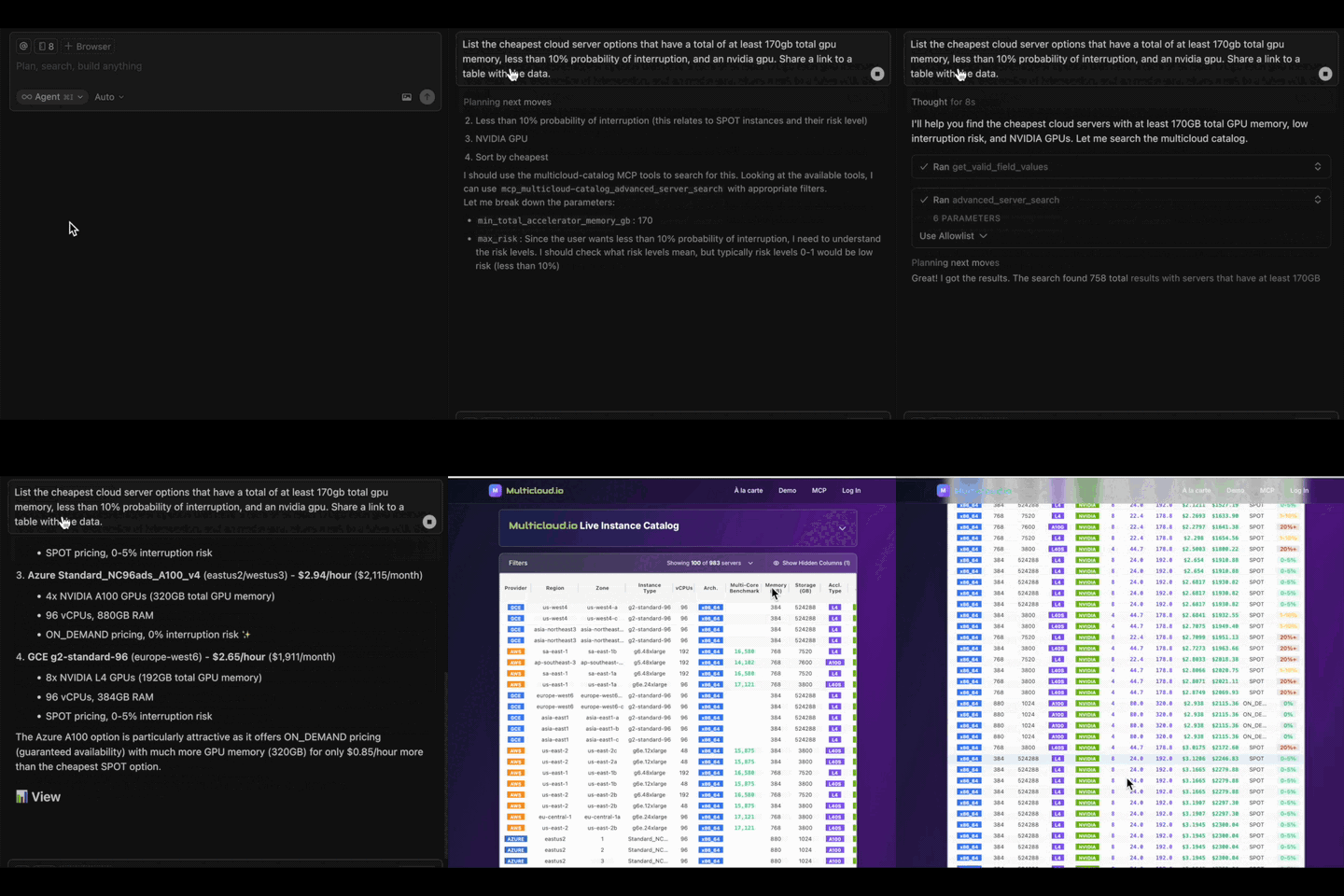
Getting Started
Create an Account
If you don't have an account yet, sign up here.
Generate an API Key
Go to your Account page and click "Generate New Key" to create an access key.
Configure Your AI Assistant
Choose your AI assistant below and follow the integration instructions.
Auditing your own cluster
Everything on this page connects your assistant to the Multicloud catalog. The Multicloud Advisor is a second, separate MCP server: it runs inside your Kubernetes cluster, reads it read-only, and answers one question — what would the same work cost somewhere else?
It is never exposed to the internet. Your assistant reaches it through your own kubectl port-forward, so your Kubernetes RBAC is the gate. It does need a catalog key, which your agent writes straight into a Kubernetes Secret.
Claude Code
claude plugin marketplace add multicloud/skills && claude plugin install multicloud-advisor@multicloudThen ask it to audit your cluster. It handles the install, the tunnel and the registration.
Any other agent
Point it at the skill and tell it to follow the instructions there. Same content, fetched fresh each session — you just have to ask for it by name.
https://multicloud.io/agent/skill.mdReviewing this before approving it? What the agent does covers scope, permissions, blast radius and revocation — no login required.
Integration Instructions
Click on your AI assistant to view setup instructions:
Alternative: OAuth2 Authentication
In addition to API key authentication, our MCP server also supports OAuth2 authentication. This provides a more secure and user-friendly authentication flow.
OAuth2 Setup Requirements
- Create a Multicloud account (if you haven't already)
- Use the client ID: multicloud-mcp-client
- Configure OAuth scopes: openid
MCPJam Configuration
For MCPJam users, you can configure OAuth2 authentication as shown in the screenshot above:
- Set Authentication to "OAuth 2.0"
- Check "Use custom OAuth credentials"
- Enter multicloud-mcp-client as the Client ID
- Set OAuth Scopes to openid
- Use the URL: https://mcp.multicloud.io/mcp
Note: OAuth2 authentication provides automatic token refresh and better security compared to static API keys. Choose this method if your MCP client supports OAuth2 flows.
Need Help?
If you encounter any issues during setup, please check:
- Your API key is correctly copied (no extra spaces)
- Your AI assistant is up to date
- The configuration file syntax is valid JSON
- You have an active internet connection